
Our Capabilities
Conventional Machining Processes
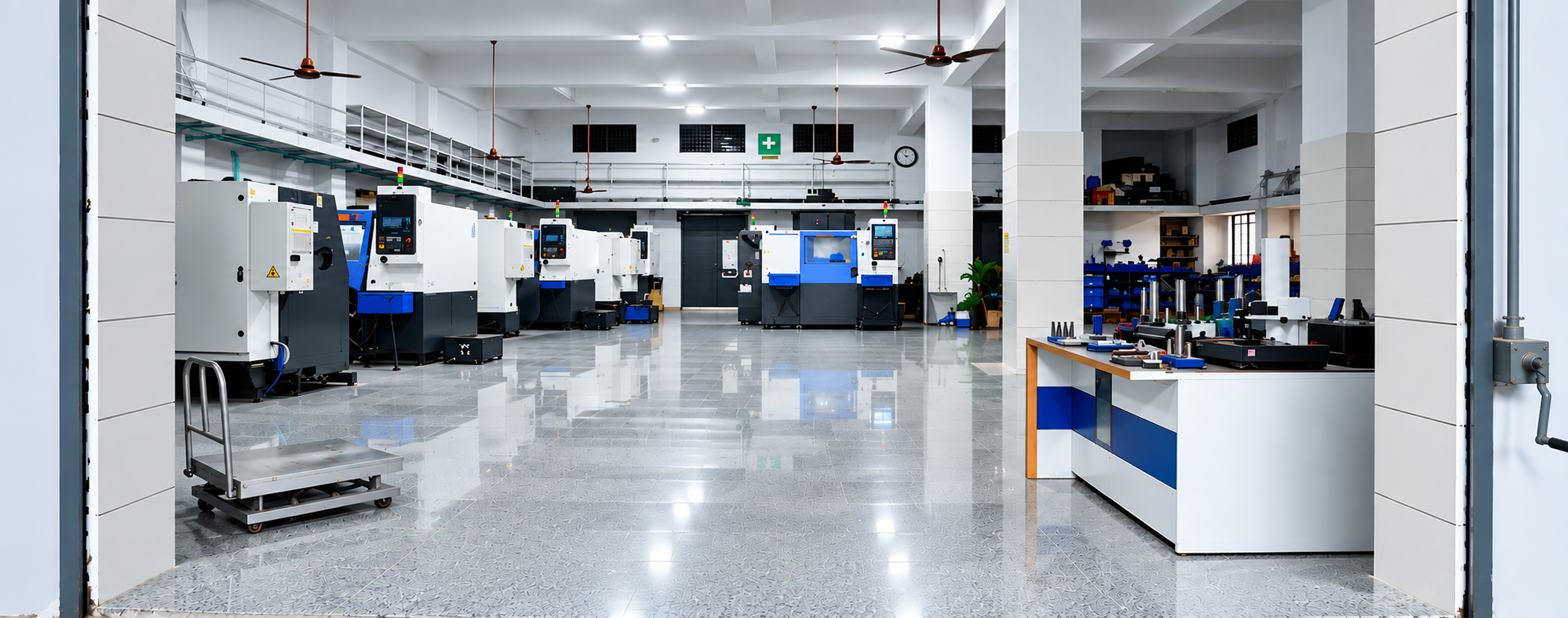
Alongside CNC technology, we operate a fully equipped workshop for conventional machining operations to support rapid stock sizing, secondary machining, and custom tool preparations.
Turning
Spins a cylindrical part on a lathe while a single-point tool cuts away material from the outside.
Milling
Uses a fast-spinning, multi-point tool to carve flat surfaces, slots, or complex shapes out of a fixed workpiece.
Drilling
Pushes a rotating drill bit into solid material to make round holes.
Boring
Enlarges an existing hole inside a workpiece using a single-point tool for high concentricity.
Grinding
Uses a high-speed wheel made of abrasive grit to smooth surfaces and get precise dimensional sizes.
Broaching
Uses a toothed tool that slides linearly in a single pass to cut internal shapes like keyways and splines.
Sawing
Uses a notched blade to cut raw metal stock into smaller, usable pieces for downstream processing.
CNC Precision Machining
Our advanced CNC machining services achieve close tolerances and mirror-like finishes, maximizing the structural and machinability advantages of high-quality brass.
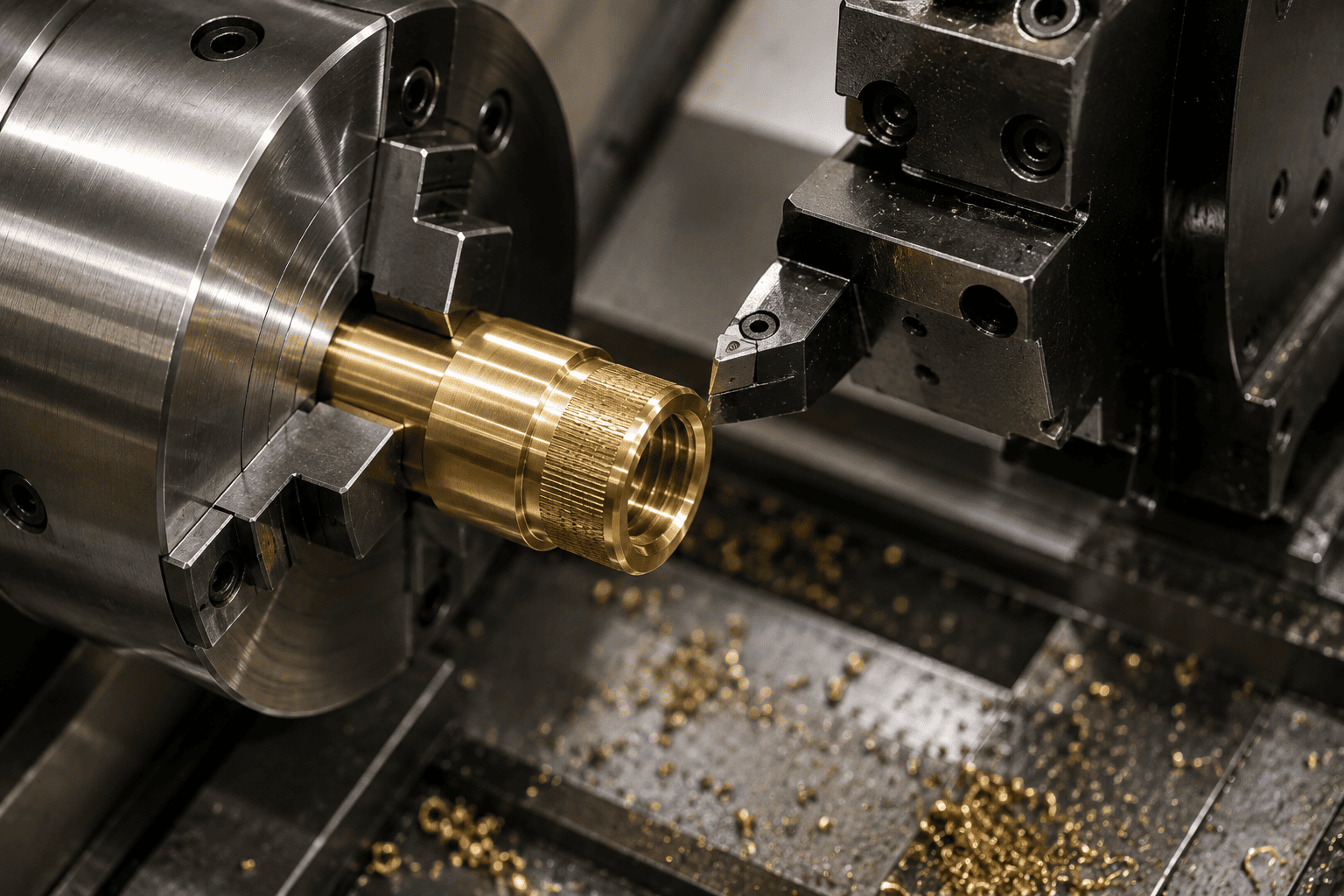
This is the most common process for brass. Brass is ideal for high-speed automated lathes to create round parts like fittings, screws, musical instrument valves, and adapters.
It achieves highly accurate dimensions and smooth, mirror-like surface finishes without the need for secondary polishing operations.
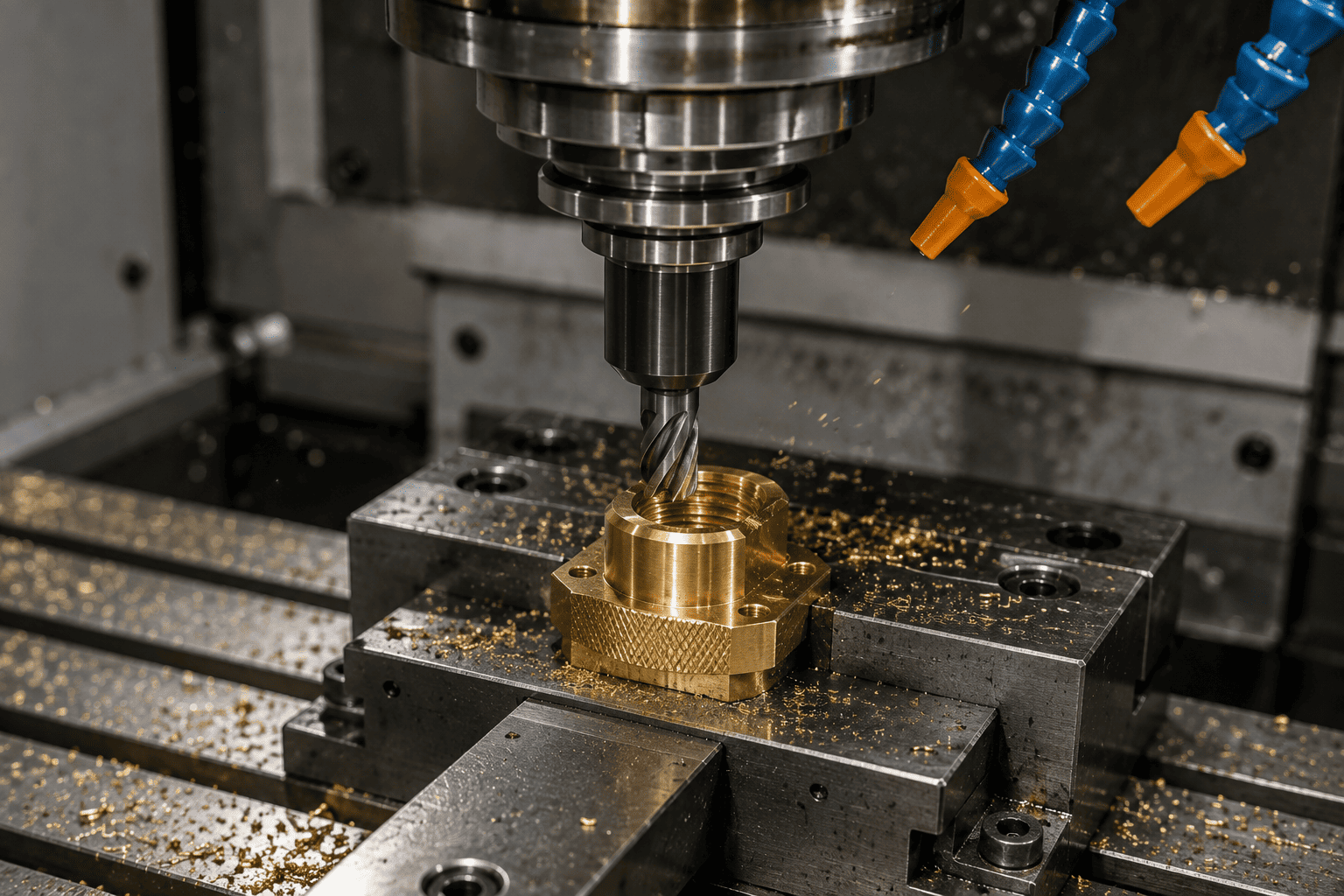
Perfectly suited for machining non-cylindrical shapes, flat faces, pockets, complex enclosures, housings, and customized mounting brackets.
The rapid chip-breaking property of brass ensures that multi-point milling cutters slice through the material 2 to 3 times faster than stainless steel without gumming up the tool blades.
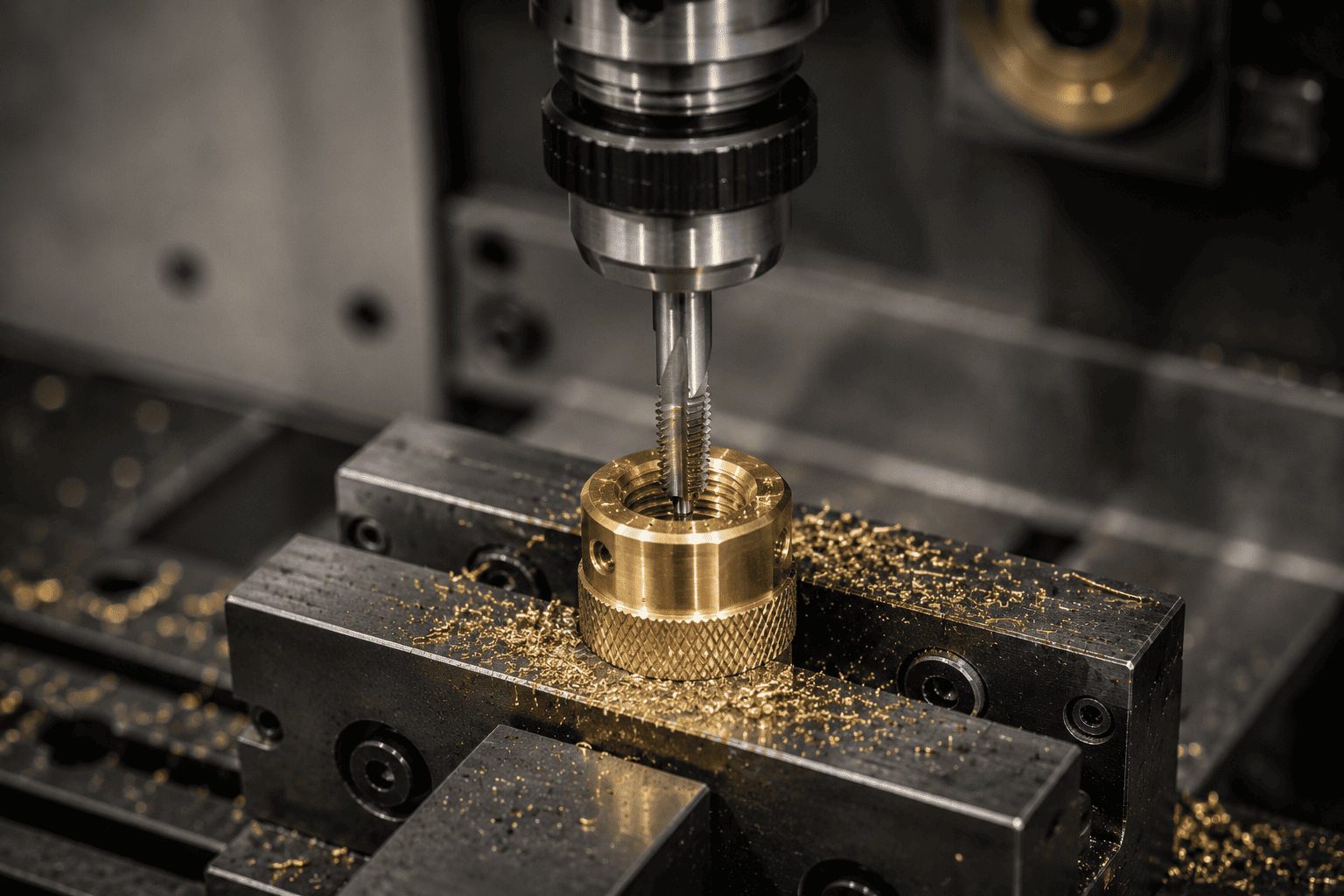
Creating precise holes and cutting precise internal threads (tapping) is exceptionally smooth and fast when working with industrial brass.
Threaded brass parts maintain crisp, sharp edges without tearing or stripping out, which is common in softer aluminum or plastics.